
Working on Amped Mobile was one of those rare projects where creativity meets constraint head-on.
When our team at Typhon Mobile was approached by Player One to adapt the Xbox 360 snowboarding game Amped for mobile, it was exciting, but we knew we had a task that required us to think beyond what was familiar.
This wasn’t about cutting features or reducing the original game to fit—it was about translating the essence of Amped into something that could still be fun, engaging, and meaningful on a much smaller platform.
Adapting a Console Experience to Mobile
Back in 2008, mobile gaming wasn’t what it is today.
The hardware had clear limitations, and the Java J2ME platform we were working with was a world apart from the high-end gaming consoles of the time.
We couldn’t recreate the full 3D landscapes that made Amped so immersive on Xbox 360, but that didn’t deter us. Instead, we asked ourselves: what is it that makes Amped so enjoyable?
It was clear the game’s visual style—bold, colorful, and urban—was key to the experience.
Beyond that, it was the snowboarding itself: the tricks, the movement, the challenges.
These were the elements we knew we had to preserve. The team didn’t see these constraints as limitations; we saw them as invitations to innovate.
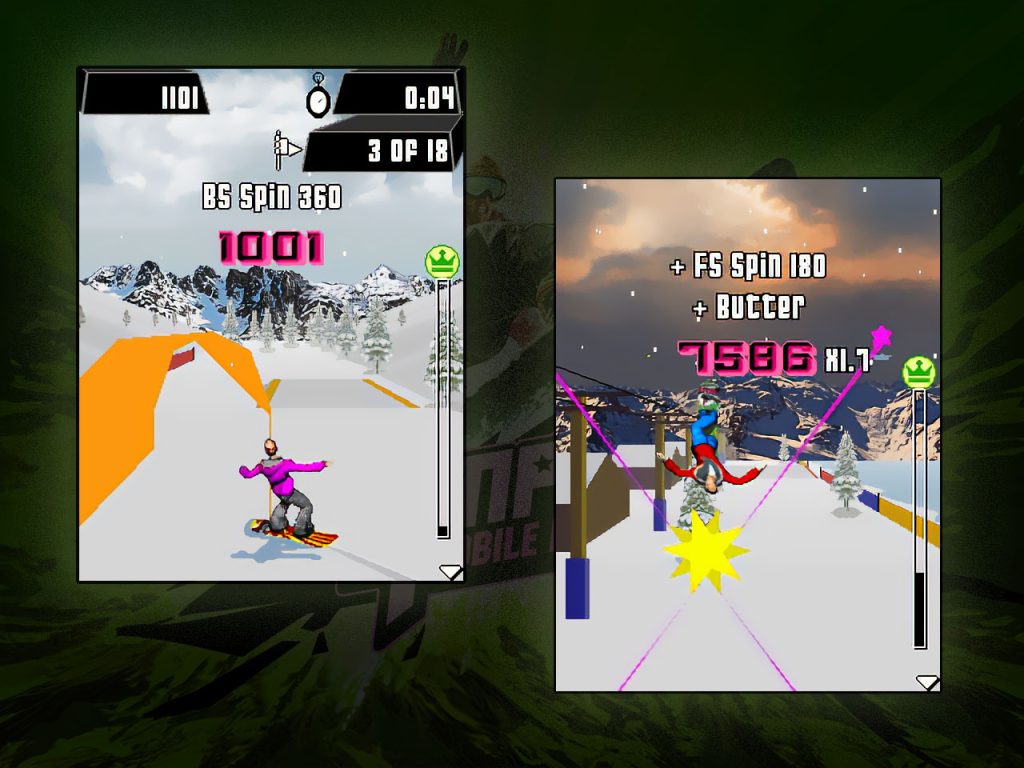
One of our developers suggested a “2.5D” approach using vector graphics to create the illusion of depth.
It wasn’t full 3D, but it worked beautifully, allowing players to feel the speed and movement of snowboarding in a way that was fluid, yet lightweight enough for mobile devices.
Focusing on What Mattered Most
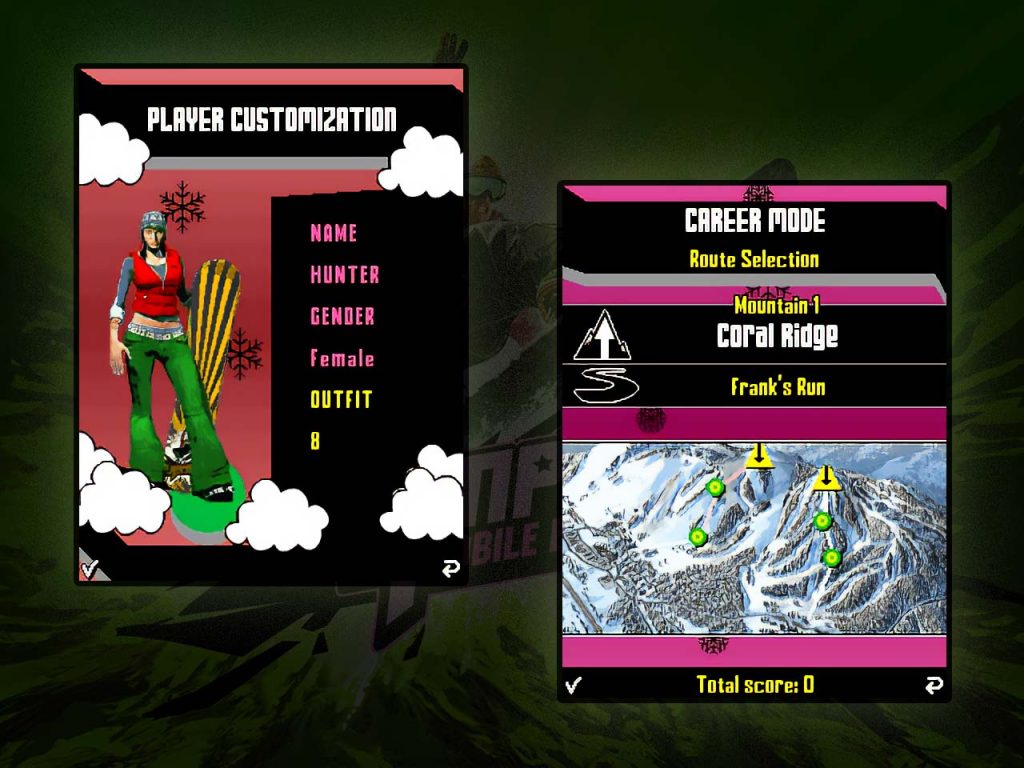
The trickiest part of the project was deciding what to keep and what to let go.
The full console experience couldn’t be squeezed into a mobile game, so we focused on the heart of Amped: the gameplay.
The tricks—like butters, aerials, and combos—were critical.
But more than that, it was about giving players the sense of freedom that snowboarding is known for.
We created a challenge system that allowed players to unlock new slopes and new tasks, keeping them engaged and offering reasons to come back.
It wasn’t about creating a technically impressive mobile game. For us, the focus was on delivering fun. Simple, engaging, snowboarding fun.
And we found that by staying true to those core principles, the rest of the pieces fell into place.
Innovation in the Face of Constraints
Every step of the way, we had to make trade-offs.
The game had to fit into a 500k file—an incredibly small size, especially by today’s standards.
But instead of feeling limited by this, we found ways to make it work.
By using vector graphics for most of the environment and keeping sprites to a minimum, we optimized the game’s performance across devices without sacrificing too much visual quality.
For lower-end handsets, we scaled back the frame rates and simplified some elements, but we made sure that the core gameplay remained smooth and enjoyable.
It was a balancing act, one that required constant tweaking and testing, but it allowed us to create something that worked across a range of devices without losing the essence of the game.
A Surprising Success
The result? Amped Mobile exceeded our expectations.
It received positive reviews, and Player One saw a fivefold return on investment.
The game was so well-received that they asked us to develop a sequel, Amped 3 Mobile, which also performed well in the market.
While the success was a testament to the game’s appeal, it was also a reminder of the power of focusing on what really matters: the player experience.
We didn’t need to recreate Amped’s entire console experience to capture its spirit.
We just needed to focus on what made the game fun in the first place.
What I Took Away
Working on Amped Mobile taught me a lot about rising to a challenge, but it wasn’t just about me.
It was about the collective effort—the ideas from the team, the collaborative problem-solving, and the shared goal of creating something that worked, despite the odds.
If there’s one lesson that stands out, it’s this: constraints can be a catalyst for innovation.
We weren’t limited by what we couldn’t do—we were driven by what we could.
And sometimes, when you focus on the heart of the experience, the technical feats become less important.
It’s the gameplay, the immersion, the feeling that really resonates with players.
Looking back, it wasn’t just about adapting Amped for mobile—it was about showing what could be done when creativity is given room to breathe, even within the confines of a small screen.