Data is like a heartbeat—consistent, rhythmic, and vital for survival.
But it’s the mind that interprets these beats, deciding when to act and how to adjust.
Without intuition to guide it, data alone remains a signal with no direction. Together, they form the pulse of progress.
“Data reveals the path, but intuition drives the next step.”
KPIs as the Pulse of Progress
In the early stages of building a product, particularly a Minimum Viable Product (MVP), it’s tempting to pursue many different ideas at once.
Yet, key performance indicators (KPIs) act as the heartbeat of any product, offering vital signs of whether your decisions are steering toward success.
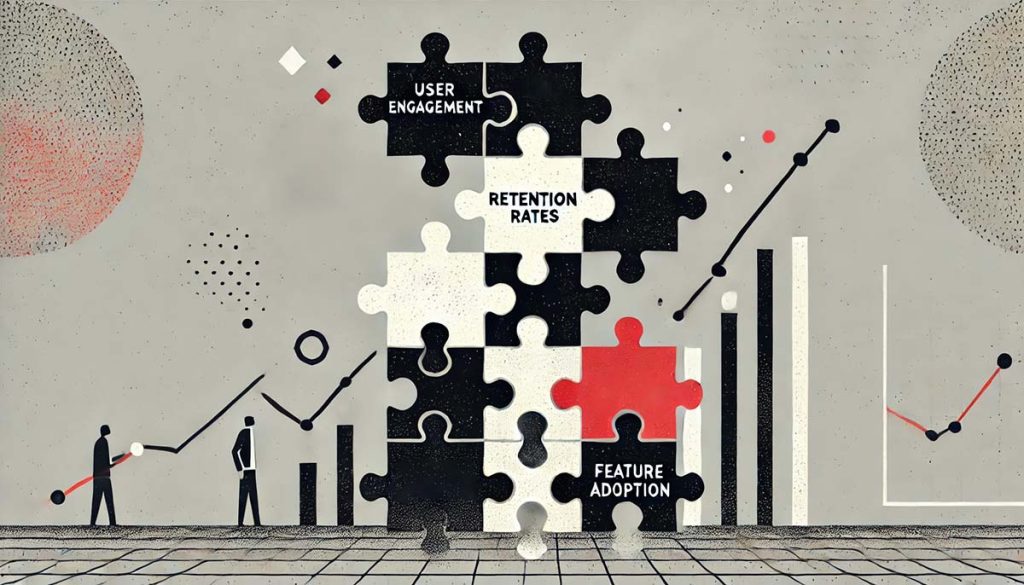
KPIs like user engagement, retention rates, or feature adoption can tell you exactly where your product stands.
These metrics are the lifeblood of a data-driven approach, ensuring that even with limited resources, startups focus on the features that will have the highest impact.
Prioritising features through KPIs ensures that each decision aligns with measurable goals, keeping the product agile and adaptable in its growth.
Feedback as the Voice of the User

While data gives us the numbers, user feedback speaks in a language of its own.
It’s the voice that tells you where friction exists—whether users are getting stuck or feeling confused.
These pain points often reveal themselves through analytics, like a drop in user progress, but data alone can’t explain the whole story.
Introducing solutions like better tutorials or simplified features begins with listening, but succeeding depends on iteration.
Refining a product is a continuous conversation between users and developers, where feedback informs the changes and data measures their effectiveness.
It’s not just about hearing the problem; it’s about translating that feedback into actionable improvements.
Performance as a Living Indicator
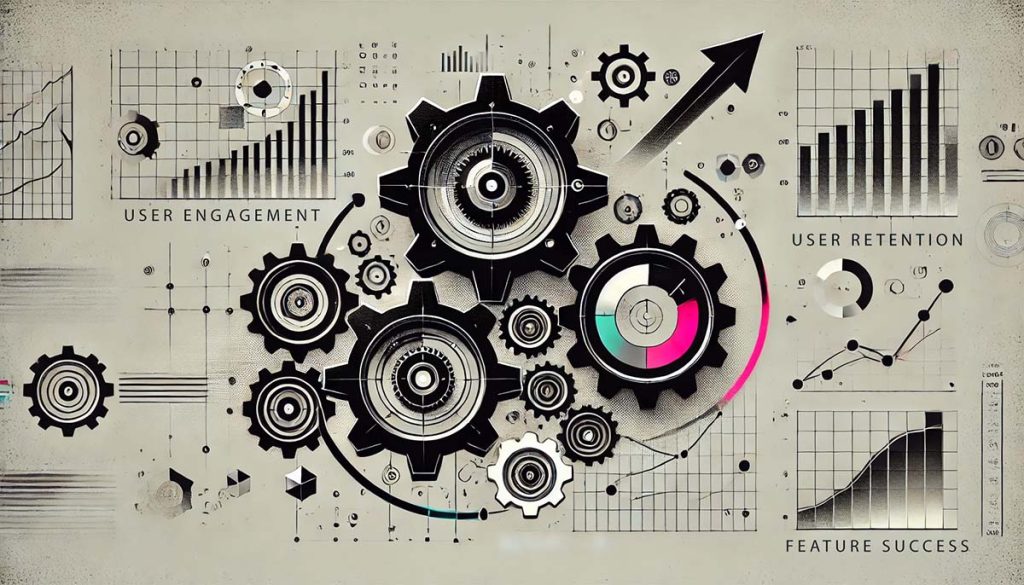
Post-launch, tracking how each feature performs is crucial.
Each feature in your product is like a muscle that needs to be exercised and nurtured.
If it’s weak—if users aren’t engaging as expected or progress stalls—it requires attention.
Data will show which features thrive and which ones falter, but understanding when to push for more refinement or when to pivot entirely is essential.
Monitoring feature performance over time provides a living indicator of whether your product is moving in the right direction.
With each iteration, your product becomes stronger and more aligned with user expectations.
The Subtle Art of Intuition

While data illuminates the areas that need attention, it’s often professional intuition that leads to the most creative solutions.
Sometimes, the answer lies not in what the numbers directly suggest but in how we interpret those numbers.
Intuition enables us to explore alternative paths, guiding decisions that aren’t immediately apparent in the data but can make all the difference.
However, relying solely on gut feelings risks going off course.
The most effective strategy blends cold, hard data with the insights that come from experience.
Together, they ensure that the product evolves in a way that feels both logical and inspired, staying true to business goals while adapting to user needs.