
A ship without a clear course drifts aimlessly, but even with a perfect map, it’s powerless without wind to drive it forward.
Vision charts the way, but execution fills the sails. Without both, progress halts, and the journey never begins.
“Vision without execution is a daydream; execution without vision is a nightmare.”
Vision Stands Tall, but Blind Without Action

Vision captivates us, offering a glimpse of the future as we dream of possibility.
Yet, the excitement of expansive ideas can sometimes blind us to the practical steps required to make them real.
Too often, teams bask in the brilliance of their big picture but stumble when translating it into action.
Ideas remain untethered to reality, drifting beyond reach as ambitions outgrow the means to achieve them.
This gap between vision and execution is where innovation falters, not from a lack of ideas, but from an inability to ground them in action.
Execution Strikes, But Lacks Meaning Without Vision
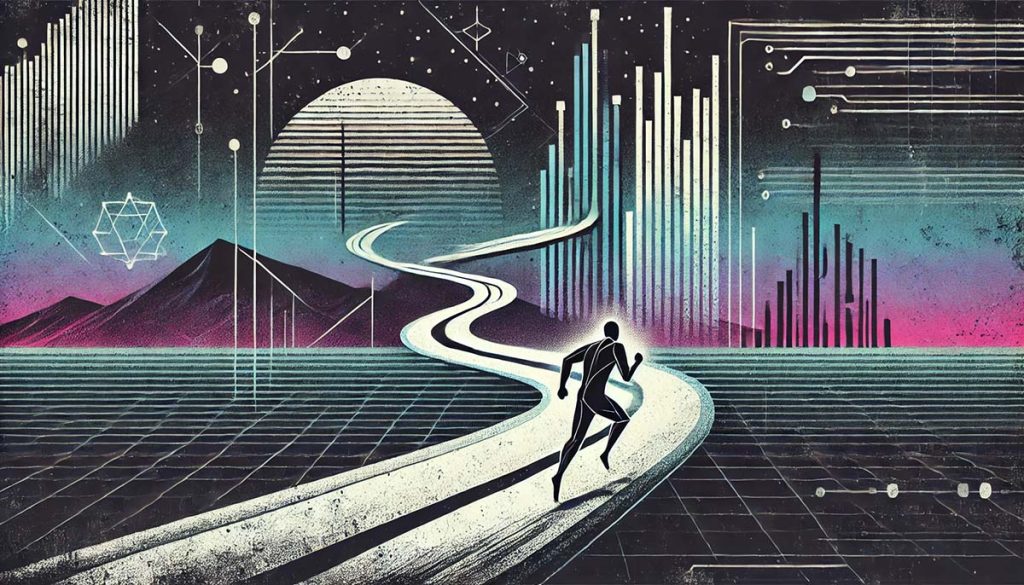
“Movement without direction is still just wandering.”
On the other hand, relentless execution, without clarity of purpose, can become mindless activity.
Without a strong vision anchoring the work, teams may deliver, but it’s delivery without depth—progress without direction.
Features creep in, distractions flourish, and suddenly the project spirals into something unrecognisable from its original intent.
The challenge isn’t just creating something functional; it’s ensuring that functionality serves the greater idea.
Execution needs to stay laser-focused, not just on speed, but on steering toward meaningful results that stay true to the core vision.
The Art of Balancing Compromise and Innovation
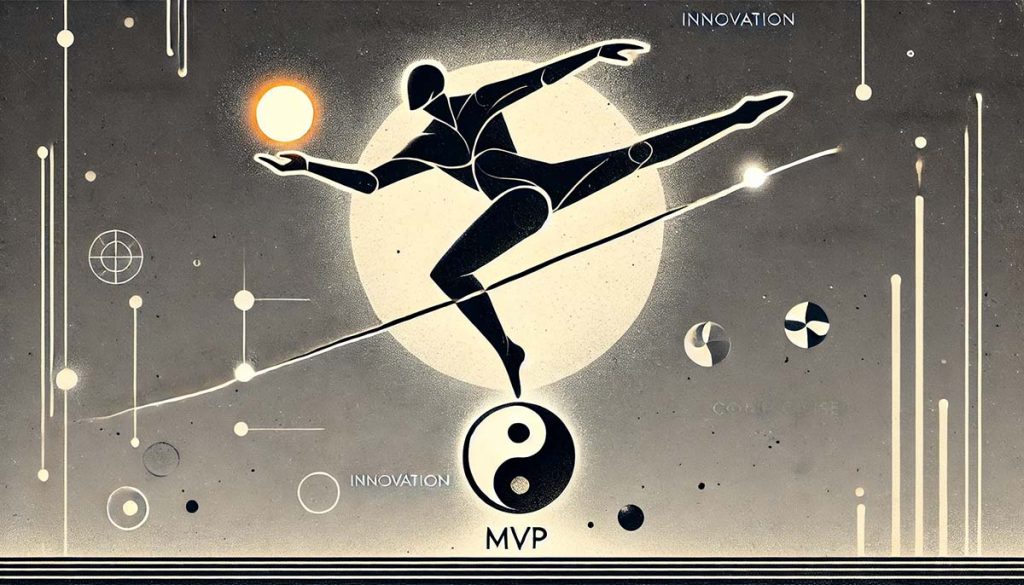
Compromise becomes a crucial element in the dance between vision and execution.
Resources are limited, time is finite, and teams must make trade-offs to deliver.
In this compromise lies the power to iterate—to release a Minimum Viable Product (MVP) that reflects the essence of the vision while staying grounded in practical limitations.
Perfection is sacrificed for progress, but this sacrifice isn’t failure; it’s evolution. With each iteration, new insights come, guiding the team closer to the final goal.
Knowing what to hold on to and what to release becomes the hallmark of successful execution.
Prototyping: The Bridge Between Idea and Reality

The prototype acts as the conduit between lofty visions and tangible execution. It’s where the abstract becomes concrete, offering teams the chance to iterate before committing fully.
A prototype is both a promise and a safeguard—it promises that the vision can be realised, while safeguarding against the risk of venturing too far off course.
Testing ideas early with live users, refining through feedback, and then moving toward full development creates a loop of continuous improvement.
It’s how vision and execution not only coexist but elevate each other, ensuring the final product is both innovative and attainable.
Harmony of Vision and Execution

"Vision may draw the map, but execution ensures you reach the destination."
In the delicate balance of vision and execution, success lies not in choosing one over the other but in harmonising both.
Vision provides the spark that ignites creativity, while execution fans the flame that brings it to life.
Striking this balance is the difference between dreaming and doing—knowing when to dream big and when to roll up your sleeves and get to work.