
Think of the ego as a flame in a lantern, bright enough to light our path but shielded from the wind’s fiercest gusts.
When balanced, it burns calmly, illuminating our strengths and aspirations without scorching others around us.
This flame, carefully tended, allows us to move forward with clarity and warmth, confident in our own light yet respectful of the flames that burn in others.
“A healthy ego doesn’t shout; it guides with calm conviction.”
The Ego as Our Inner Architect
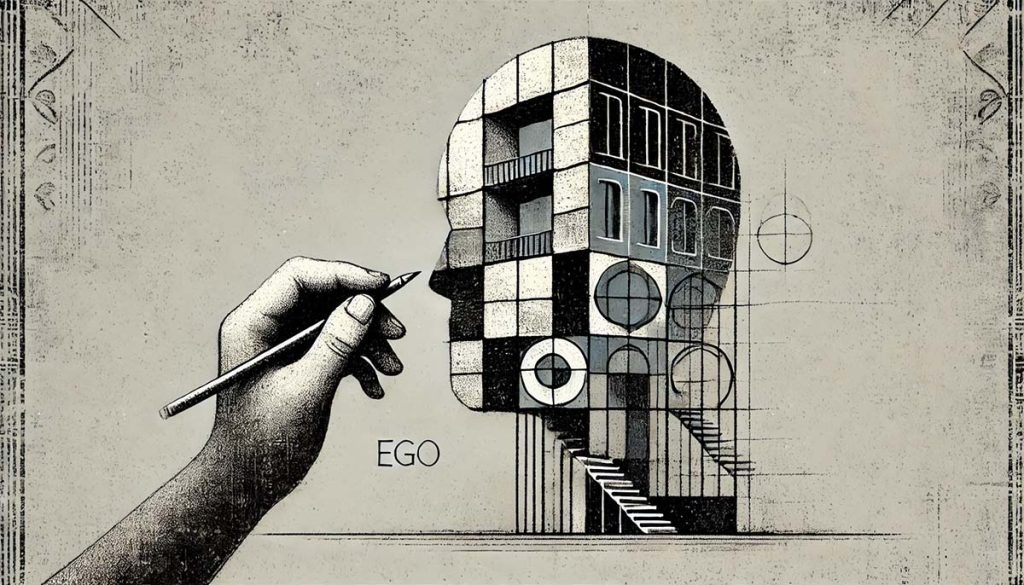
“It sketches our reality with a pencil, poised to redraw with wisdom.”
The ego can be seen as an inner architect, tasked with constructing a sense of self that is both sturdy and flexible.
Freud introduced the ego as a crucial mediator that tames the impulsive forces of the id while easing the rigid moral judgments of the superego.
The ego, in this sense, isn’t an inflated pride or a fragile construct; it’s a dynamic blueprint that helps us make choices aligned with who we are and who we aspire to be.
When built well, the ego’s framework supports us in setting boundaries, standing firm in our values, and developing a lasting resilience.
It grants us the ability to approach challenges with a steady hand, adapting as needed without losing our essential structure.
The Ego’s Dance with Self-Perception
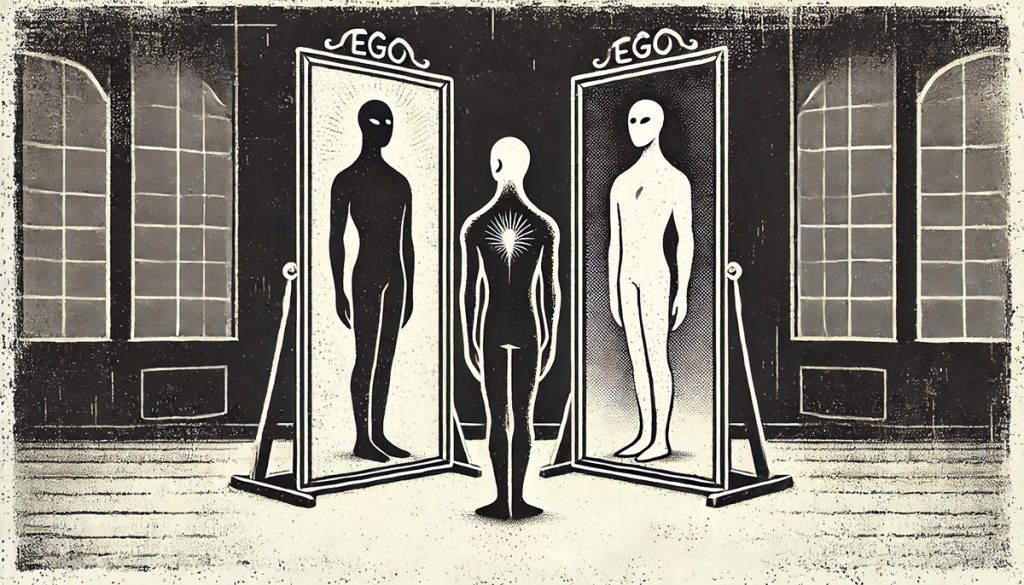
The ego also orchestrates how we perceive and project ourselves in the world, balancing our need for self-assurance with openness to feedback.
When aligned, the ego encourages self-appreciation and humility, allowing us to recognise our strengths without diminishing those of others.
Yet, if the ego becomes overly dependent on praise or validation, it may inflate, isolating us in a self-centred bubble, resistant to change and vulnerable to even the smallest critique.
Conversely, a weakened ego may lead us to doubt ourselves, over-relying on others to validate our worth.
In its healthiest form, the ego encourages us to hold our heads high without the constant need to be applauded, building a resilient self-respect that doesn’t crumble under judgement or missteps.
The Ego as a Catalyst for Growth

“It propels the journey from self-awareness to self-improvement.”
At its best, the ego is a catalyst that propels us toward growth, encouraging us to confront weaknesses without succumbing to self-loathing. It allows us to acknowledge our imperfections while retaining the courage to improve.
This healthy form of ego embraces constructive feedback, not as a threat, but as a means to sharpen and strengthen.
Such an ego encourages us to grow from setbacks, to value ourselves without the need for validation, and to see the learning embedded in our daily lives.
In fostering this growth-oriented perspective, the ego builds a foundation that makes us more adaptable, fostering the kind of self-confidence that remains steady through change.
Cultivating a Balanced Ego
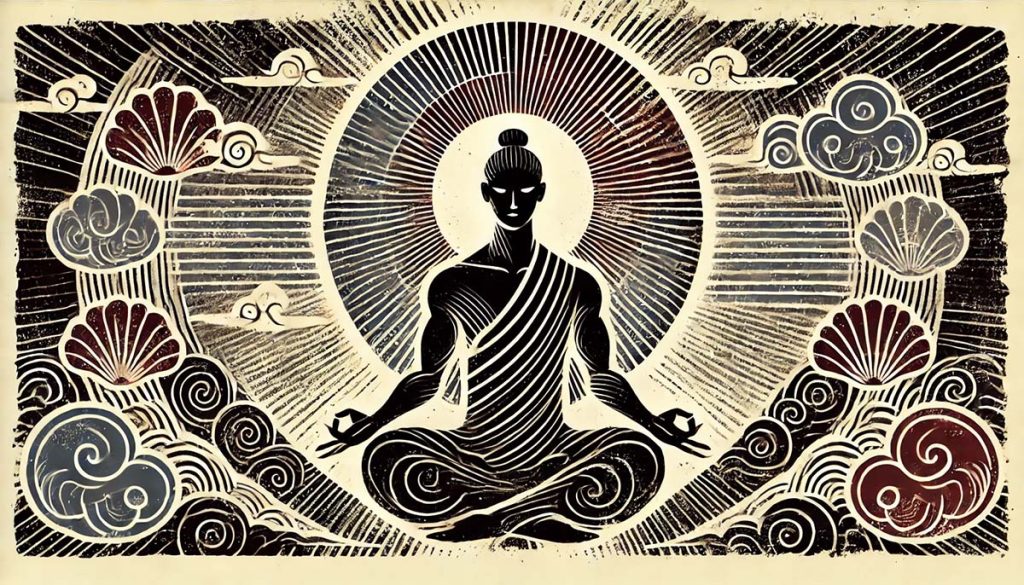
When we nurture a balanced ego, it becomes our ally, offering confidence without arrogance and openness without insecurity. It’s a steady companion, helping us hold true to our values while embracing growth and change.
Cultivating this balanced perspective requires us to turn inward, to recognise both our limits and our potential, and to welcome the continuous evolution of who we are.
In doing so, we build an enduring sense of self that can face both success and failure with grace, fostering a resilient spirit that is neither ruled by validation nor undone by criticism.